
Dustless Hardwood Floor Refinishing in San Diego
Bring tired, scratched, or sun-faded floors back to better-than-new.
Licensed · Insured · Bonded · CSLB C-15 #1002910
CSLB C-15 licensed
License #1002910
Scope before work
Selections, responsibilities, and schedule documented in writing.
Warranty in writing
Workmanship coverage is stated clearly in your agreement.
See the work
The details that make the finished space feel right.
Real project and process photography is labeled as such. Design visualizations show direction only, never claimed client work.
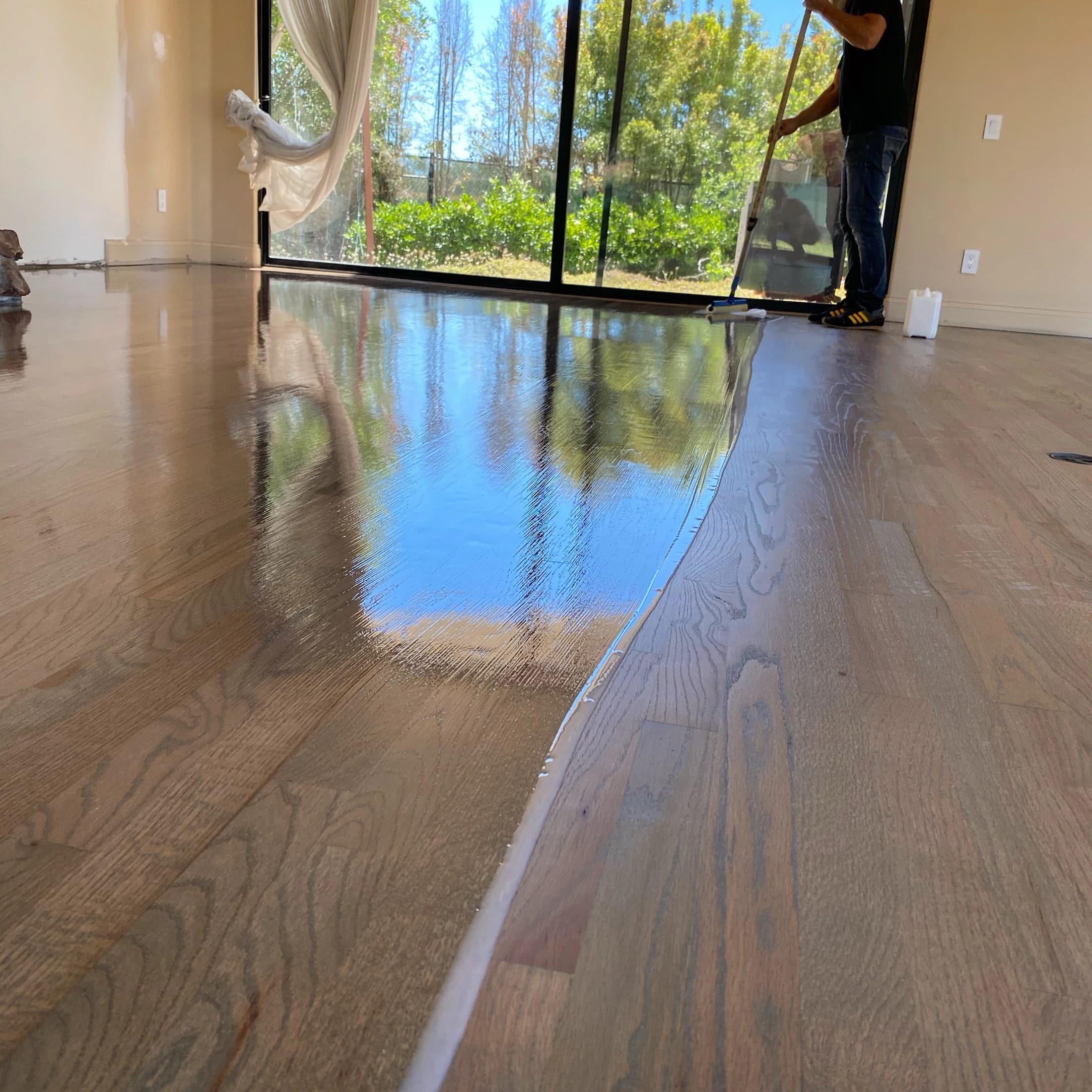
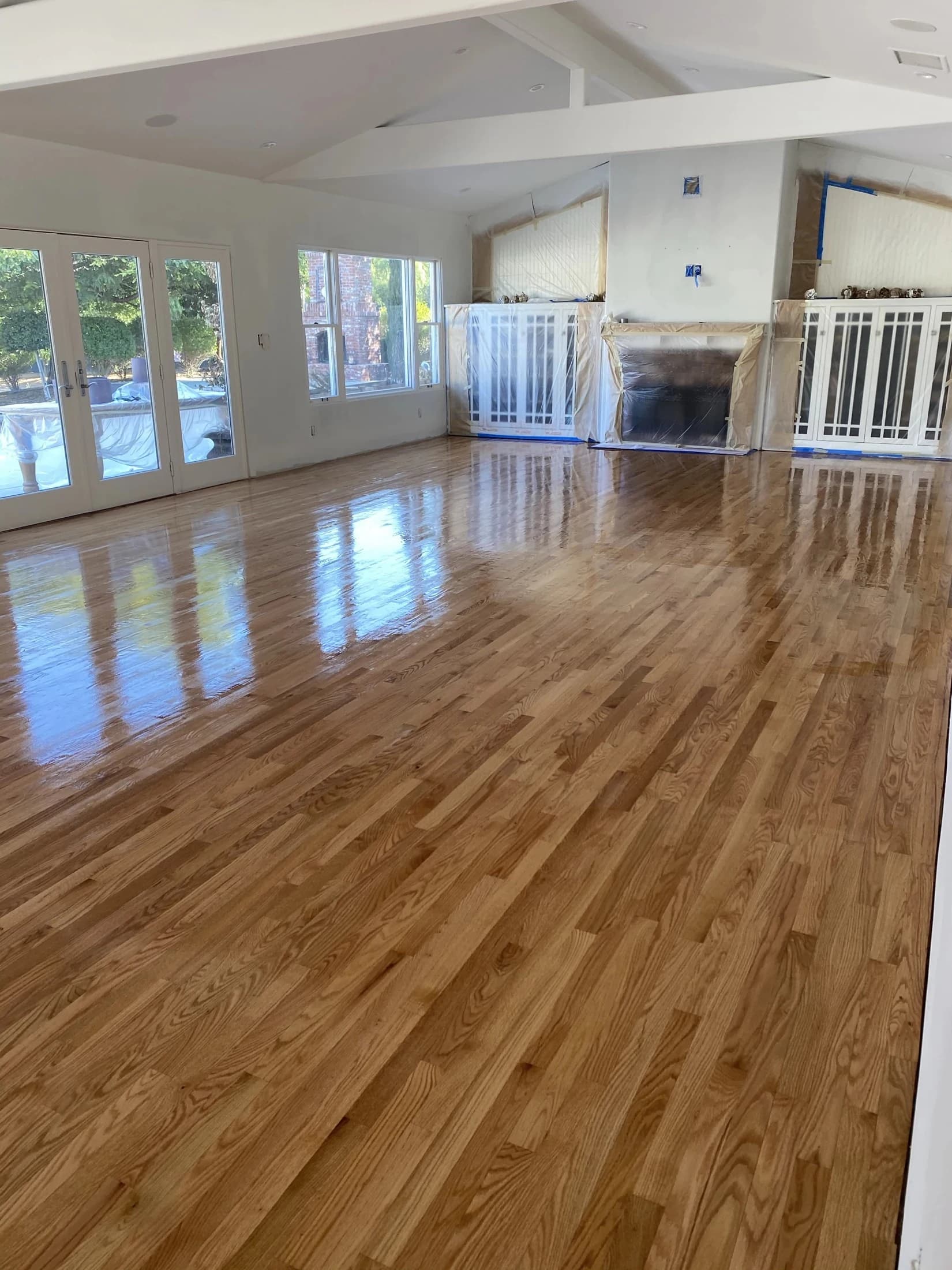
Have a similar space? Send a few photos and we can tell you what to evaluate before the on-site consultation.
Overview
Hardwood Refinishing in San Diego
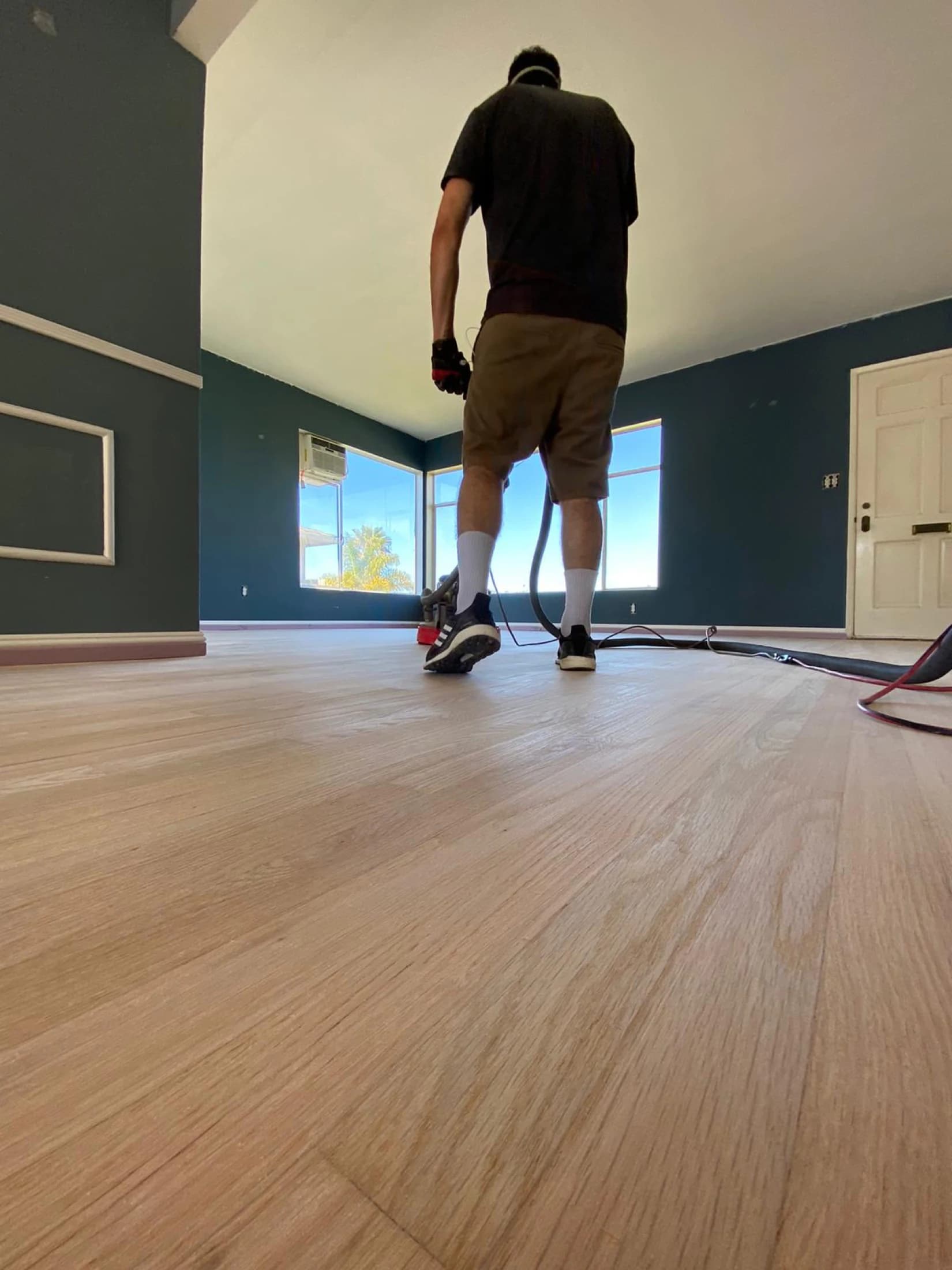
We assess wood species and condition, protect adjacent surfaces, then sand with dust-containment equipment, repair as needed, and apply your chosen finish in coats. The schedule depends on size, finish, and dry times, so we confirm a realistic timeline for your floors before we start rather than quoting a generic week count.
- Dustless sanding keeps the vast majority of dust out of your home, so families and businesses can often stay in place.
- Exotic and white oak restoration that corrects decades of wear, pet damage, and water marks.
- Your choice of finish and sheen, from natural matte to hardwax oil to a richer stain, applied by specialists.
Do you need it?
How to know it's time to refinish
Refinishing restores the surface, not the structure. These are the signs your floors are ready, and still good candidates:
The finish looks dull, cloudy, or worn in the walkways
When the protective topcoat wears thin, traffic lanes go flat and grey before the wood itself is damaged, the ideal moment to recoat or refinish.
Fine scratches you can feel, but that haven't reached bare wood
Scratches sitting in the finish (not gouged into the wood) sand out cleanly. Caught early, it's a light job.
Water spots, pet stains, or sun-faded patches
Surface discoloration and UV fade usually lift with sanding and a fresh finish. Deep black stains soaked into the grain may need spot board repair.
It's been roughly 7-10+ years since the last refinish
Most hardwood benefits from a refresh on that cadence: sooner in high-traffic homes, later in light-use spaces.
You want a different color or sheen
Going lighter, richer, or from glossy to matte is a refinishing project, not a replacement.
Why refinish instead of replace
A fraction of replacement cost
Refinishing reuses the floor you already own, typically far less than tearing out and installing new hardwood.
Dustless, so you can often stay home
Our sanders connect to containment vacuums that capture the vast majority of dust at the source, so families and businesses frequently stay in place.
Restore the original character
Decades-old solid oak often has tighter grain and warmth you can't buy new. Refinishing brings it back instead of throwing it away.
Choose a whole new look
Natural matte, hardwax oil, or a richer stain: the same floor can read modern-coastal or warm-traditional depending on the finish.
Better for resale and the planet
Buyers value real, well-kept hardwood, and keeping existing wood out of the landfill is the greener choice.
Make the right call
Refinish or replace? How we decide
On the free assessment we check wear-layer thickness and damage depth, then recommend honestly, even when that's the smaller job.
Refinish if…
- It's solid hardwood, or engineered with enough wear layer left
- Damage is surface-level: finish wear, light scratches, fading
- Boards are flat and sound (no cupping, rot, or movement)
- It hasn't already been sanded down to its limit
Replace if…
- There's deep water damage, rot, or a subfloor issue
- Boards are cupping, buckling, or separating widely
- The wear layer is too thin to sand safely again
- You're changing species, plank width, or layout
Pro tips before you refinish
- ◆Don't wait until the finish wears through to bare wood. Once traffic reaches the wood, you risk permanent staining and a harder, costlier sand.
- ◆If wear is light, ask about a screen-and-recoat: a buff and fresh topcoat costs less and lasts years, with no full sand needed.
- ◆Matte and satin finishes hide micro-scratches and dust far better than high gloss, a smart pick for busy households.
- ◆Plan for cure time: floors are walkable in a day or two, but wait before moving furniture back or laying rugs.
- ◆Sample stains on your actual floor, not a chart. Species and age change how a color takes.
What affects your investment
- Total square footage and how the space is laid out
- Wood species and current condition (repairs, deep stains)
- Natural finish vs. a custom stain or multiple coats
- Stairs, closets, and detailed trim work
- Whether a full sand or a screen-and-recoat is the right call
How it works
A clear path from first call to final walkthrough.
We assess wood species and condition, protect adjacent surfaces, then sand with dust-containment equipment, repair as needed, and apply your chosen finish in coats. The schedule depends on size, finish, and dry times, so we confirm a realistic timeline for your floors before we start rather than quoting a generic week count.
Consult & assess
A free on-site visit to understand your goals, space, and conditions before anything is priced.
Scope & schedule
A written scope, material selections, and a realistic timeline you approve before work begins.
Build & walkthrough
One accountable team executes on the confirmed schedule, then walks the finished result with you.
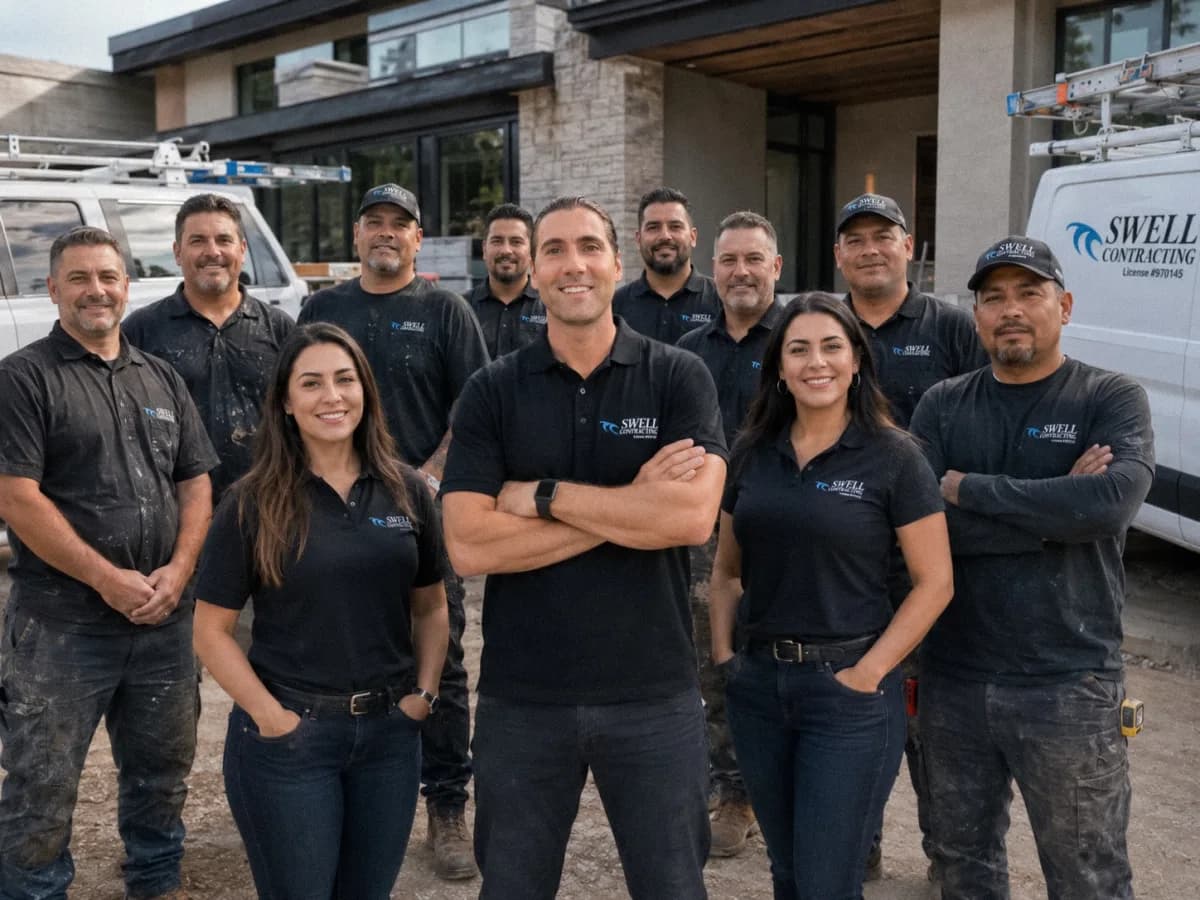
Family-owned in San Diego since 2004
Know who you're hiring
Licensed, documented, and accountable after the last walkthrough.
Two CSLB licenses
B #970145 and C-15 #1002910, available to verify before you hire us.
Scope in writing
The approved work, materials, and schedule are documented before construction begins.
Written warranty
Workmanship warranty terms are included in your agreement so the coverage is clear.
“Exceeded our expectations — the care and attention to detail were outstanding.”
Planning guidance
What to budget and how long it takes.
Planning range
Scoped to your project
Every hardwood refinishing is priced to your space, materials, and scope, confirmed in a written quote after a free on-site consultation, never a one-size-fits-all number.
Typical timeline
Confirmed at consultation
Timelines vary with scope, materials, and permitting. Your project manager confirms the schedule before work begins.
FAQ
Hardwood Refinishing, answered.
How many times can hardwood be refinished?
Solid hardwood can typically be refinished several times over its life, depending on board thickness and how much wood was removed in past sandings. Engineered floors with a thick wear layer can usually be refinished at least once. We measure and advise before sanding so we never over-sand your floor.
Is dustless refinishing really dust-free?
No process is 100% dust-free, but dustless sanding connects equipment directly to containment vacuums, capturing the vast majority of dust at the source. The result is dramatically less mess, cleanup, and airborne particles than traditional sanding.
How much does it cost to refinish hardwood floors in San Diego?
Refinishing in San Diego typically runs a few dollars per square foot depending on wood species, condition, and finish. Your exact investment is confirmed after a free on-site assessment. We don't quote final pricing sight-unseen.
Free on-site consultation
Let's look at your hardwood refinishing together.
Speak with a licensed San Diego team, share the space and your priorities, then receive a written scope built around the actual project.
What happens next
- 01
Share the space
Call or text photos with the project address and what you want to change.
- 02
We review the conditions
We ask the practical questions that affect scope, materials, and sequencing.
- 03
Meet on site
A free consultation confirms the details before a written proposal is prepared.