
Find your hardwood.
Compare the woods we install and refinish by hardness, tone, grain, and cost, then talk it through with a Tidal Flooring specialist.
Bar = Janka hardness (lbf)
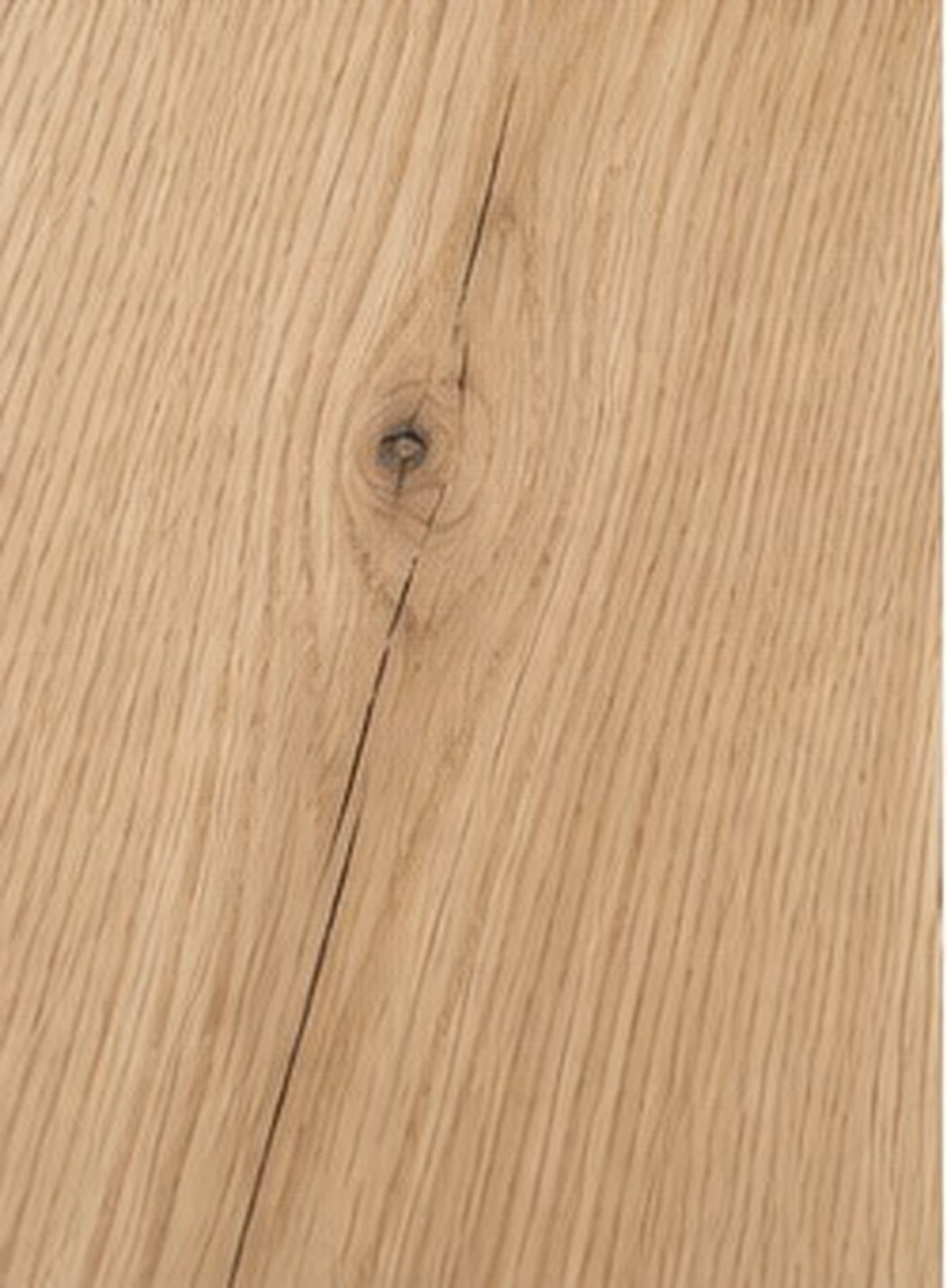
White Oak
The signature of modern coastal luxury. Neutral undertones take natural and stained finishes beautifully, and its closed grain resists moisture better than red oak.
- Hardness (Janka)
- 1360 lbf
- Cost tier
- $$$
- Tone
- Neutral, light-to-tan
- Grain
- Tight, straight, subtle
Best for
The short answer
White oak is the species most San Diego homeowners choose for new hardwood: hard enough for families (1,360 on the Janka scale), neutral in color, and it takes light stains and whitewash without the pink cast of red oak. Hickory and Brazilian cherry are harder; walnut is softer and darker. The explorer above compares all six.
- Hardest in the library
- Brazilian cherry 2,350 lbf, hickory 1,820, hard maple 1,450 (Janka hardness)
- Most chosen
- White oak 1,360 lbf: neutral tan to grey-brown, straight grain in rift and quartered cuts, takes stain evenly
- Matching old floors
- Most 1920s to 1950s San Diego floors are narrow-strip red oak (1,290 lbf); match with red oak, not white
- Cost direction
- Species moves the installed price within Swell's $8 to $18 per sq ft planning range; walnut and premium species sit toward the top
- Next step
- Request samples and compare them in your own light, next to your cabinets
How to read the hardness number
Janka hardness is the force needed to push a steel ball halfway into the wood. It predicts dents from dropped pans and chair legs, not scratches, which come down to the finish. A softer species with a tough two-component water-based finish will often look better after five years than a hard species under a thin finish.
For most homes with kids and dogs, anything from red oak upward is fine. Walnut is the trade-off: the color is why people choose it, and the softness is what they live with.
Coastal light changes the color
Every wood ambers under UV, and west-facing rooms in La Jolla, Del Mar and Point Loma get more of it than inland rooms. Brazilian cherry darkens the most, walnut lightens, white oak shifts the least. Rotate rugs in the first year, and ask about window film if a room gets direct afternoon sun on the floor.
Species questions
Which hardwood species is best for San Diego homes?
White oak, for most projects. It is hard enough for family use at 1,360 on the Janka scale, its neutral tan color suits coastal and modern interiors, and it takes the light and whitewashed stains homeowners ask for without the pink undertone of red oak. Hickory or Brazilian cherry suit homes that want a harder, busier floor; walnut suits homes that accept dents for the color.
What is the difference between white oak and European oak?
European oak is white oak from European forests, usually sold as engineered planks that are wider and longer than American white oak, with a slightly warmer tone and more variation. Hardness is close. If you want wide planks on a concrete slab, European oak engineered is the usual route; if you want solid wood you can refinish for decades, American white oak is.
Can new flooring match my existing hardwood?
Usually, if the species matches. Most older San Diego floors are narrow red oak, so the new boards should be red oak too, then the whole area is sanded and finished as one floor so old and new take the same stain. Matching an aged floor without refinishing it rarely works; the old wood has darkened and the sheen has worn.
Does the species change the price of installation?
Yes, through the material, not the labor. Species moves the installed price within Swell's 2026 planning range of $8 to $18 per sq ft; oak sits toward the lower half, walnut and other premium species toward the top. San Diego guides published in 2026 put oak at $8 to $15 and walnut at $12 to $19 per sq ft installed as market ranges.
Which species fades or darkens the most in sun?
Brazilian cherry darkens noticeably in its first year of UV exposure, walnut lightens, and red oak warms. White oak and hard maple change the least. In sun-facing coastal rooms, plan for it: rotate rugs, keep furniture off the same spot for the first months, and consider window film for direct afternoon light.
Planning information, not a quote or an inventory list. Prices are set in a written estimate after a site visit. Last reviewed October 2026.
Let's talk through your project.
Tell us what you're planning and we'll reach out to book a free on-site consultation. No obligation, no pressure.